Locacore
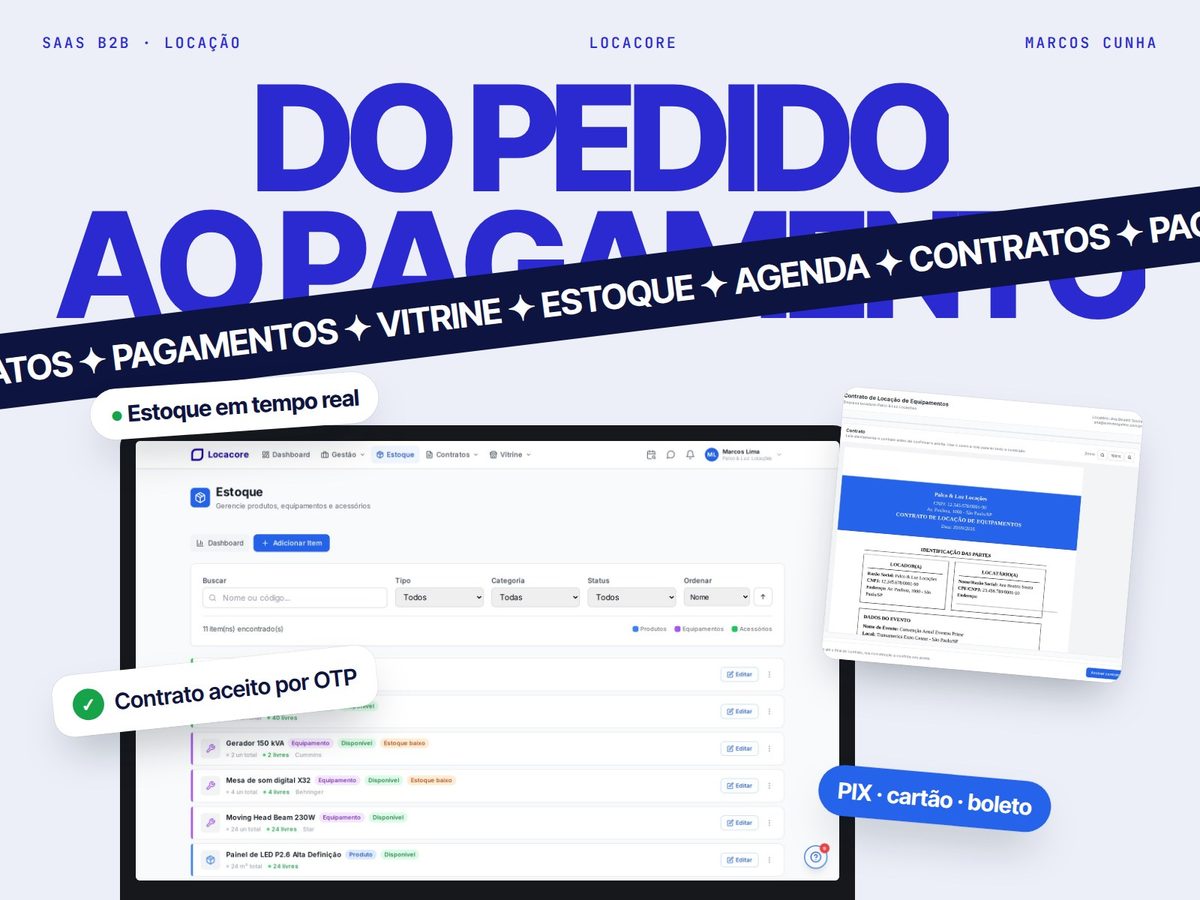
SaaS for event equipment rental companies that replaces spreadsheets and hand-written contracts with real-time stock, contracts generated from the booking and online payments.
- Year
- 2025 – 2026
- Role
- Founder, designer and developer
- Status
- In use at Real Led
- Type
- B2B SaaS • Operations
The problem
- Event equipment rental companies (LED panels, speakers, truss, LED pars) track their stock on spreadsheets and paper.
- Contracts depended on the owner: with no template and no legal background, each one took 30 to 50 minutes, sometimes more.
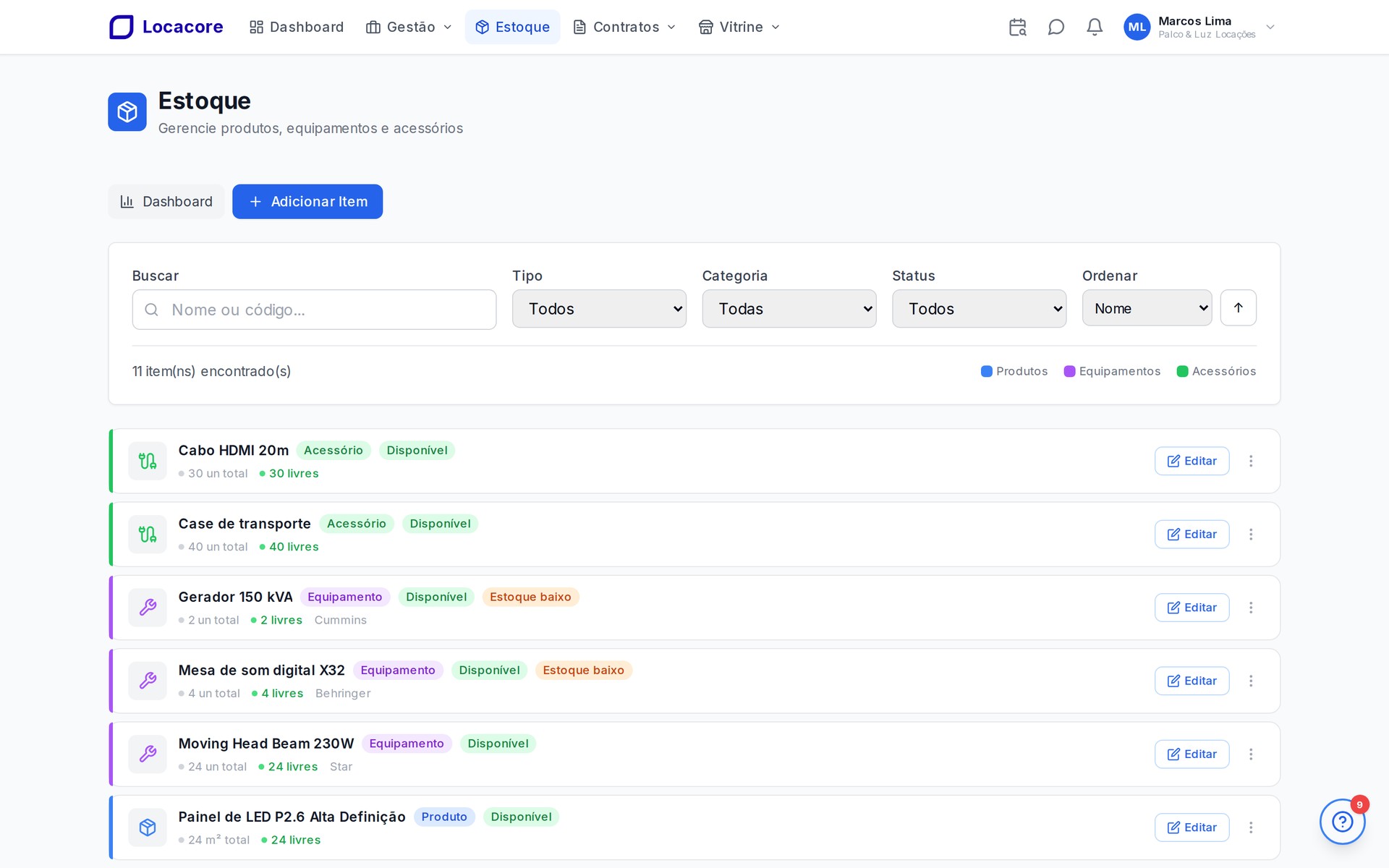
- Without up-to-date stock, the same panel could be promised to two events on the same date.
- No proof that a contract had been accepted, and billing done by hand.
Discovery
Locacore started at a rental company I know closely, specialized in events. Following their routine, I saw that the biggest friction wasn't the event itself but everything before it: drafting the contract, knowing what was available and organizing the LED panels.
Talking it through, I found that partner companies and acquaintances of that business complained about the same things. I showed early versions to event producers and LED company owners, who liked the idea and said they would use it.
What it taught me
- 01The contract was the most cited pain: slow, and dependent on a single person.
- 02Every rental company has its own rules, so one standard contract doesn't fit them all.
- 03Few people adopt a tool just to get organized. They adopt what helps them sell more.
The solution
A platform that follows the rental from order to payment. The owner enters the booking once, and the stock reservation, the contract and the charge all come from it. A public storefront turns the system into a sales channel.
Decisions
01The contract comes from the booking
The owner wrote every contract from scratch, retyping the customer, event and equipment details.
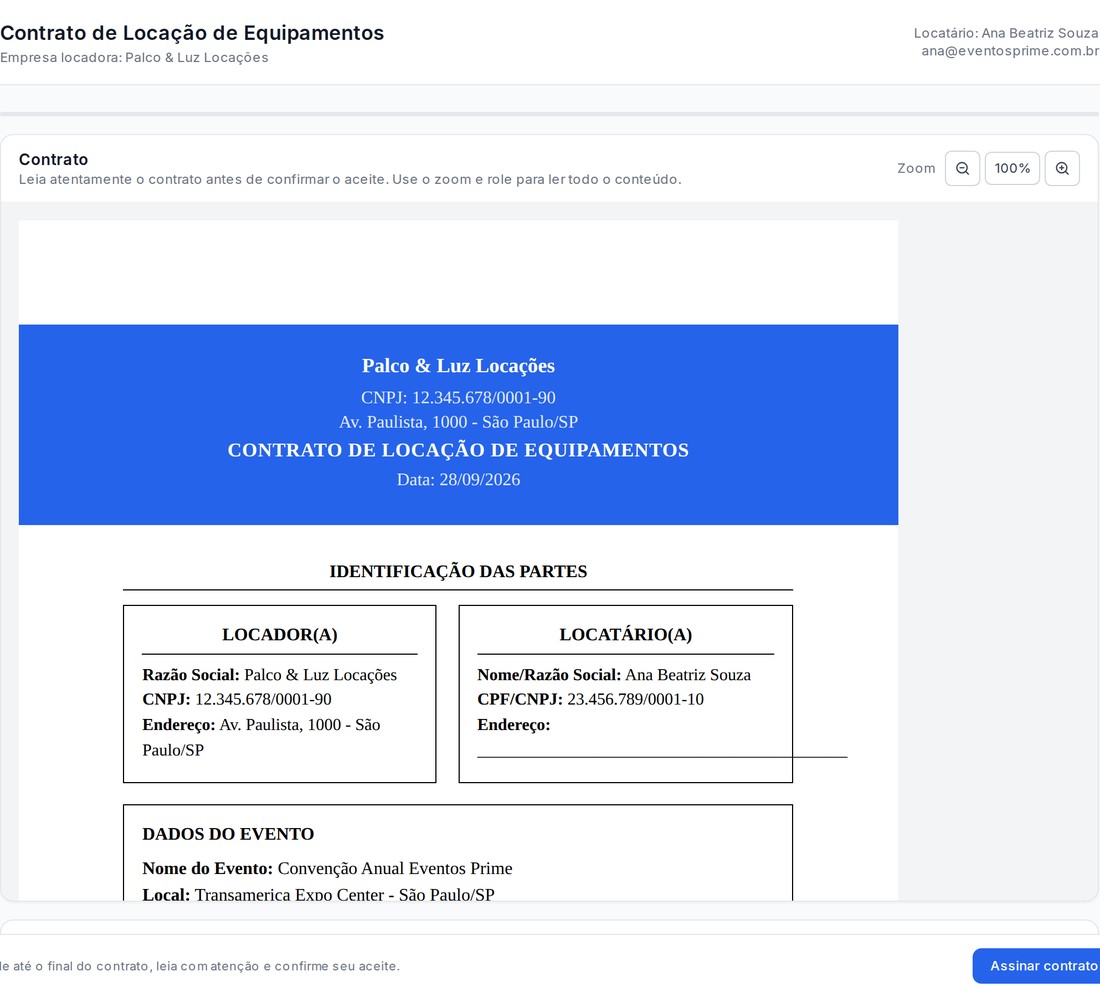
The data already entered in the booking fills the contract, which is ready to send.
Why: The time went into drafting and retyping. Without those two steps, anyone on the team can generate the contract.
02Editable clauses
The first version had a single contract template for every rental company.
Templates with clauses each company can edit, while keeping automatic generation.
Why: It was the first request after the companies tried it: each business has its own rules and wouldn't accept the same contract as everyone else.
03From organizing to selling: the storefront
The product was only an internal management tool.
A 24/7 public catalog, with its own URL and the company's theme, where customers browse equipment and request a quote.
Why: A paid-traffic professional warned me that few people pay for something that only organizes; they pay for what helps them earn more. The storefront gives the company a commercial reason to use the system every day.
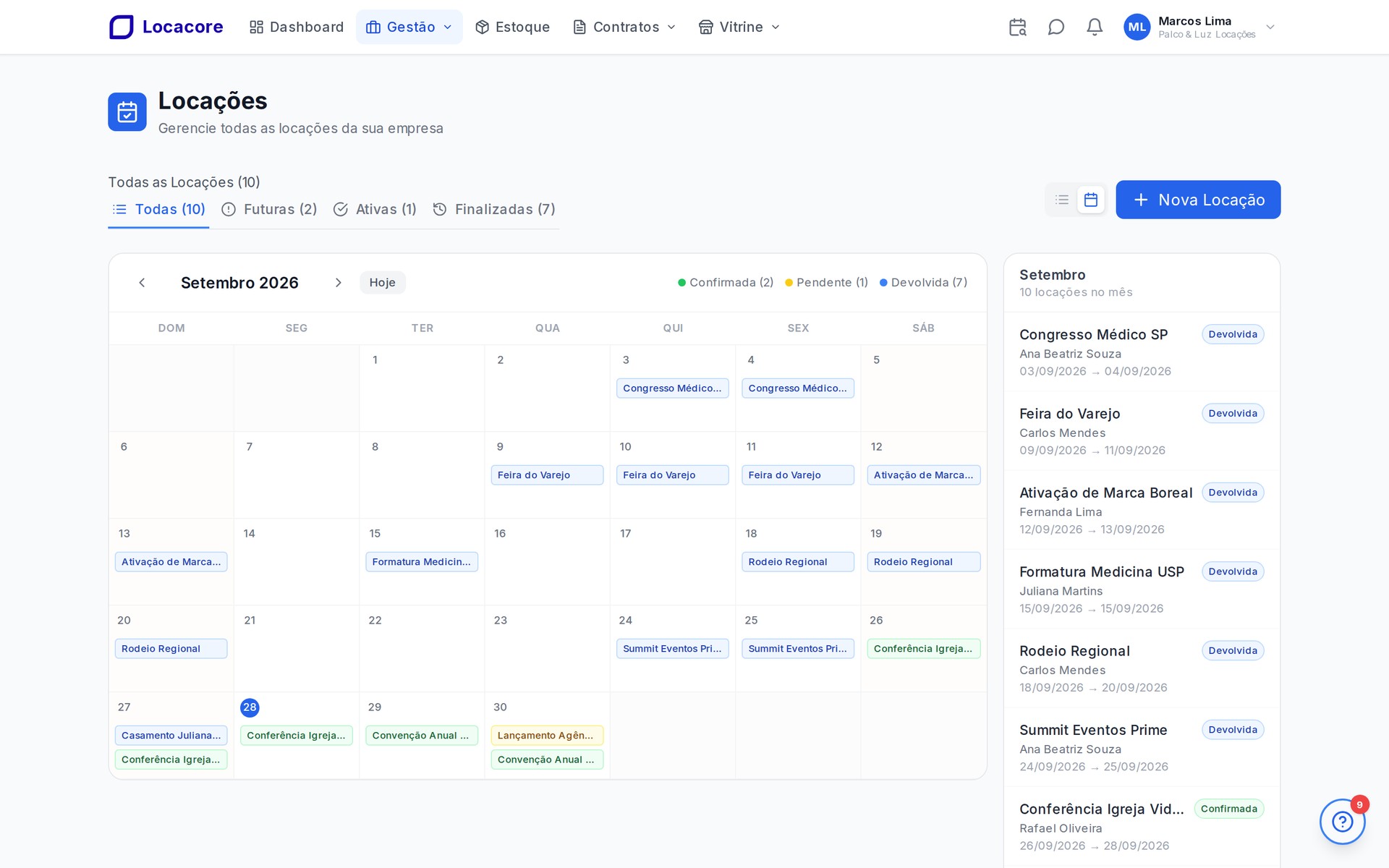
Screens
Features
Operations
- Inventory with date-based availability checks, kits and bundles, and maintenance logs.
- Bookings and quotes shared through a public link.
- 24/7 public catalog with its own URL and a customizable theme.
Contracts & payments
- Contracts generated from templates with editable clauses.
- Online acceptance with an email verification code (OTP), recorded with date and history.
- Payments through Stripe Connect (card, PIX, boleto), paid straight into the rental company's account.
Management
- Dashboard with KPIs and reports, customer reviews, automated emails and reminders.
- Admin panel for accounts, support and FAQ.
- Basic (R$ 35/month) and Pro (R$ 50/month) plans, billed through Stripe.
Results
- Contract ready in under 10 minutes, versus 30 to 50 minutes (or more) when the owner drafted it alone.
- In use at Real Led, an LED panel rental company.
- Other partner companies in talks to join the platform.
Time compared at the same company: the owner's manual process versus the flow in the system.
Next steps
- Prepare the infrastructure to take on more accounts safely.
- Bring on the rental companies that have already shown interest.
- Measure real usage: contracts generated per month and requests coming in through the storefront.
My role
Founder, designer and developer
- Problem discovery with rental companies and event producers.
- Product, flows and interface design.
- Front-end, back-end, database, integrations and deployment.
Stack
- Next.js 14
- React 18
- TypeScript
- Tailwind CSS
- React Hook Form + Zod
- Recharts
- Lucide
- Next.js API Routes
- Prisma ORM
- PostgreSQL (Supabase)
- Stripe
- Stripe Connect
- CKEditor 5
- React-PDF
- JWT + refresh token
- 2FA
- bcrypt
- Upstash Redis
- Helmet
- DOMPurify
- Nodemailer
- ImageKit
- Google Maps API
- ICS files
- Vercel
- Jest
- fast-check