Workhub
A task management platform with an AI assistant that turns meeting transcripts into tasks and decisions, and tracks the real time spent on each piece of work.
- Role
- Creator, designer and developer
- Status
- In use by the team
- Type
- SaaS • Productivity • AI
The problem
- Things agreed in meetings sometimes slipped through: tasks lived in Notion, which is paid and didn't have everything the team needed.
- Turning a meeting into tasks took around 40 minutes, writing out each one, what to do and who does it.
- There was no visibility into the time spent on each piece of work.
Discovery
Workhub was born inside my own team. After every meeting, someone spent around 40 minutes in Notion writing task after task, and some of what was agreed still got lost.
I felt the time problem myself too: I have 8 hours for my Academic Training Community deliverables and kept going way past that limit without noticing.
What it taught me
- 01The bottleneck wasn't holding the meeting, it was turning what was said into assigned work.
- 02Without measuring time, nobody notices when a deliverable has gone over the limit.
- 03AI can draft, but the team is the one that knows the context.
The solution
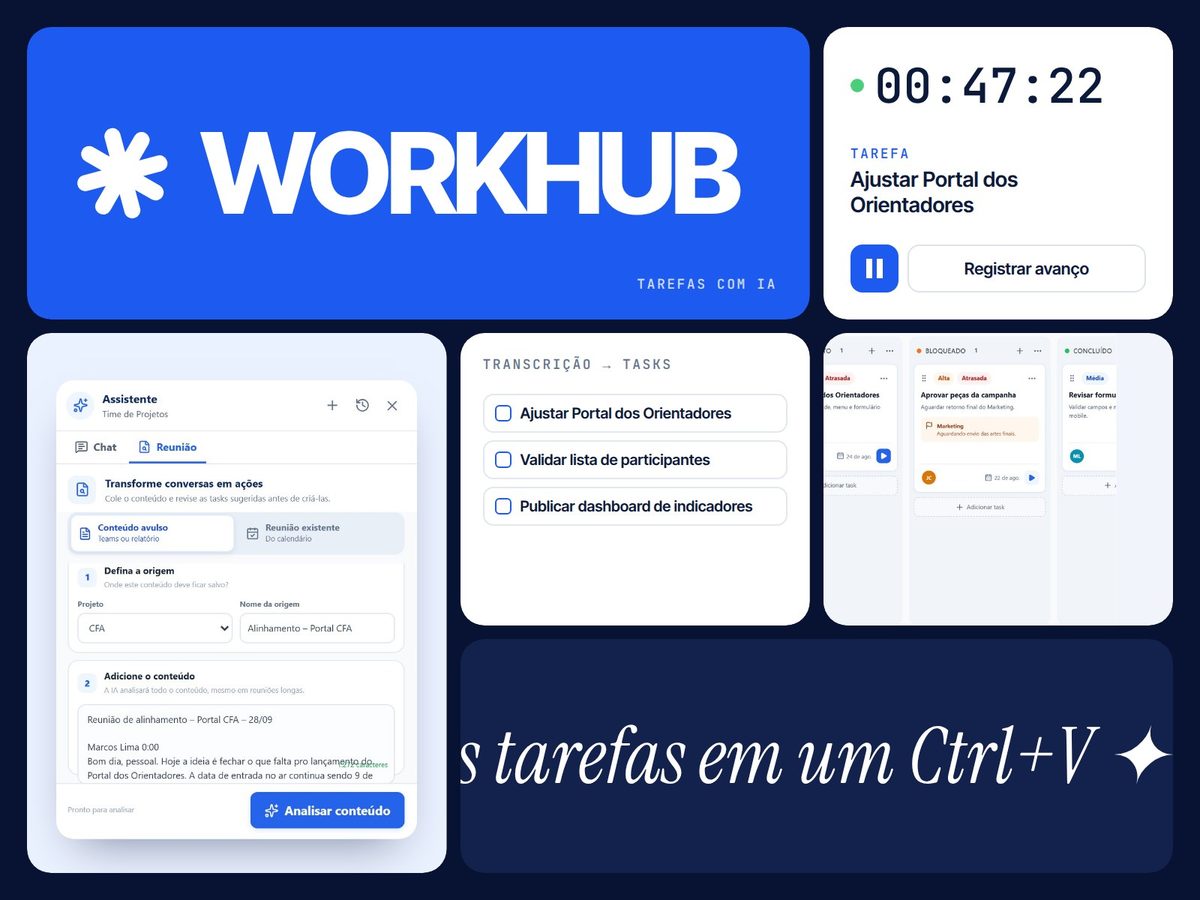
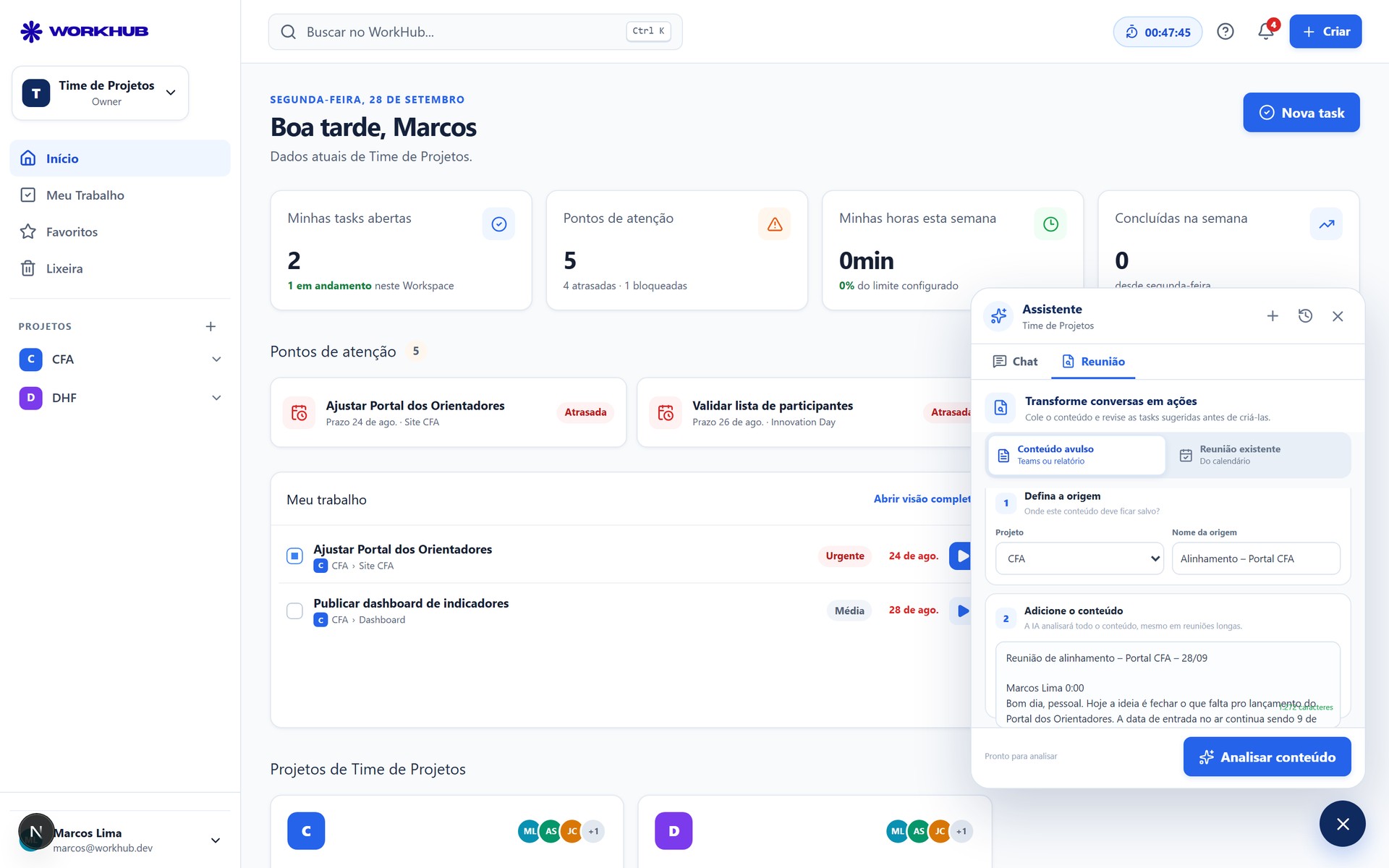
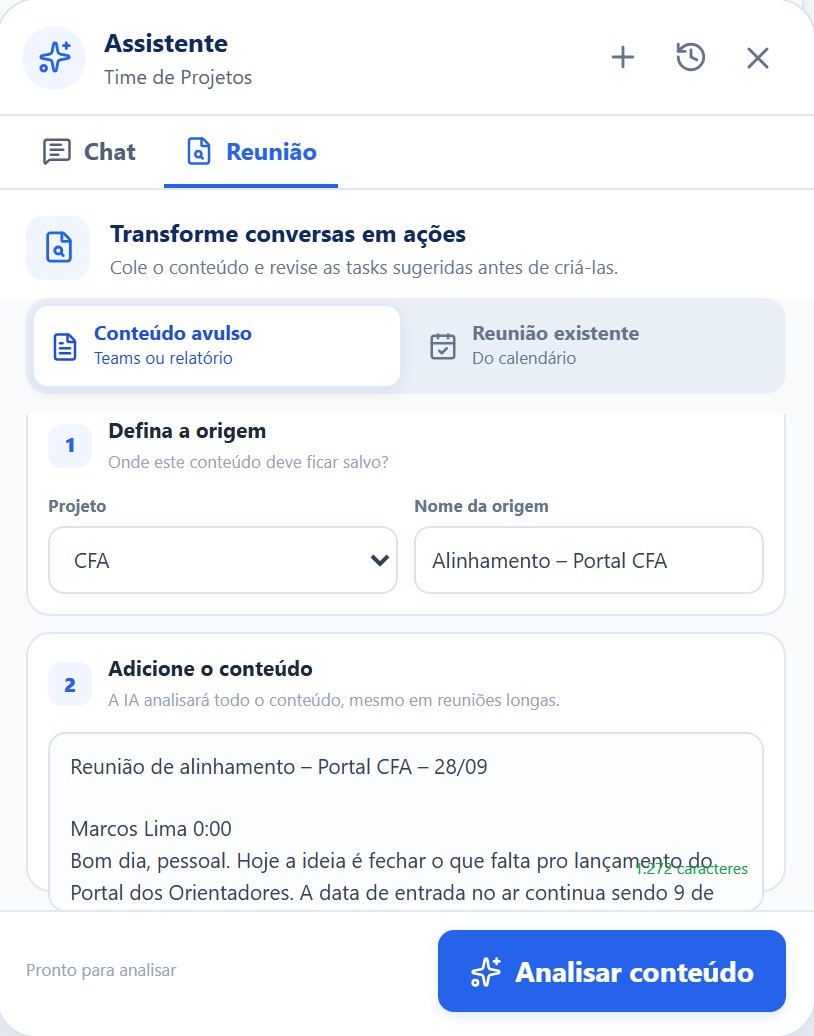
An AI assistant takes the meeting transcript (or audio) and suggests tasks, owners and decisions. A person reviews, accepts or rejects each suggestion, and every task has a play button that times how long the assignee spends on it.
Decisions
01The AI suggests, a person decides
Letting the AI create tasks straight from the transcript.
The AI returns suggestions, and a person accepts or rejects each one before any task is created.
Why: Part of what is said in a meeting has already been solved or doesn't need to become a task. An automatic decision about the team's work needs human review.
02No duplicate tasks
In testing, some tasks and decisions came back duplicated from the same transcript.
I refined how the data is organized and how the AI handles the meeting, and suggestions stopped repeating.
Why: Every duplicate is one more thing to reject. If reviewing becomes tiring, nobody reviews.
03Different people on different projects
Tasks can be assigned to different people across different projects in the same workspace.
Why: It was one of the team's requests during testing.
Screens
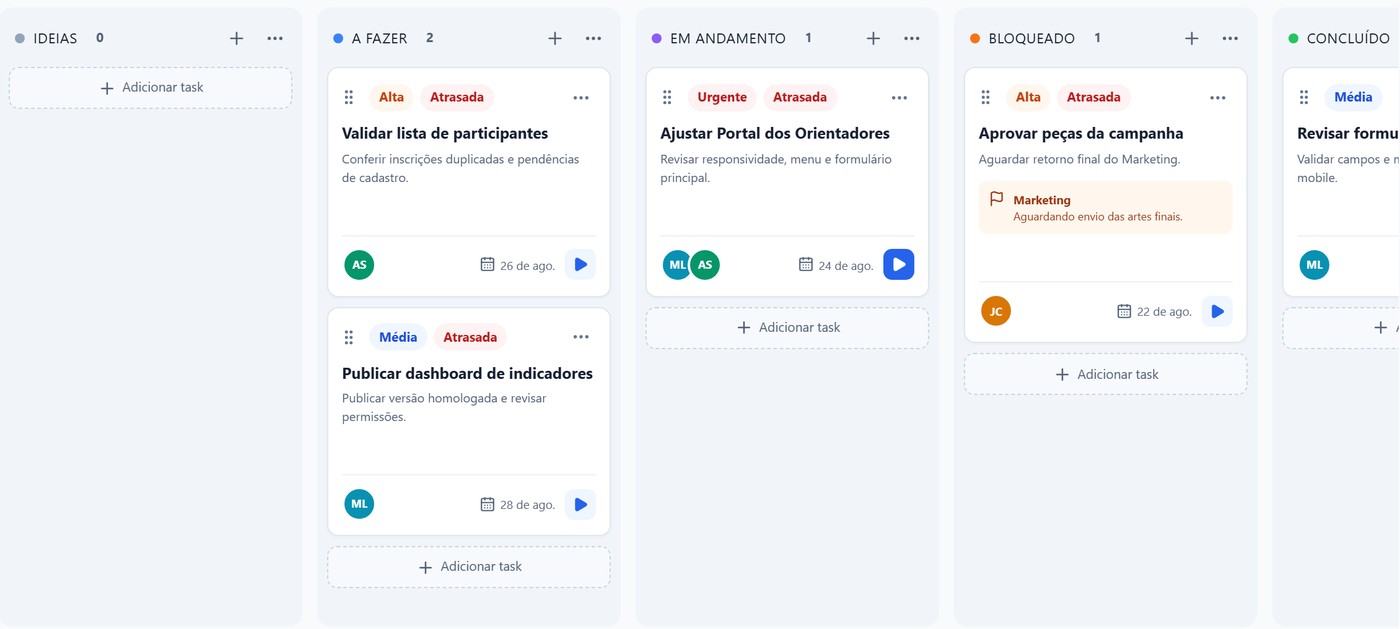
Features
AI assistant
- DeepSeek for processing and reasoning over text messages.
- GroqCloud for audio transcription.
- From meeting transcript to tasks and decisions in a single copy and paste.
Task management
- Create, assign and publish tasks in the same flow.
- Decisions recorded for every meeting.
- Per-task timer: each person starts their own timer. Nobody watches anyone else's timer live; the team only sees the hours logged.
Privacy & security
- The AI only receives what the user can already see: the context is built on the server following the database's access rules (RLS), and an automated test enforces that isolation.
- Emails, internal IDs and tokens never reach the prompt, and each task is trimmed before it is sent.
- Semantic search runs inside Supabase itself, so that data never goes to DeepSeek.
- No public sign-up: accounts are created by the admin. A penetration test by miguellarcanjo.dev tried to bypass account creation and escalate privileges, without success.
- Use approved by the company's partner, who uses the platform too.
Results
- From meeting to tasks in about 5 minutes, even for very long meetings (transcripts of up to 100,000 characters), instead of around 40 minutes writing task after task.
- Used by a team of 4, replacing Notion.
- With the timer, I now stay within the 8 hours I have for my Academic Training Community deliverables.
My role
Creator, designer and developer
- I conceived, built and tested the first phase on my own.
- I rolled the platform out to my team at work, who now use it in their routine.
- I fixed the issues surfaced by everyone's testing until it was fully functional.
Stack
- DeepSeek
- GroqCloud
- gte-small (embeddings)
- Supabase
- PostgreSQL + RLS
- Edge Functions
- pgTAP
- Vercel